


Cleats are crucial when playing outdoor sports on turf or grass surfaces since they enhance traction, improving your performance. Cleats also minimize slipping and sliding, protecting you from injuries.
Are soccer cleats and football cleats the same? Typically, soccer and football cleats look almost similar, and you may find yourself considering using your football cleats for a soccer game. However, that is not a good idea since there is a big difference between football and soccer cleats.
Here is how to tell the difference between football and soccer cleats.
Weight
The main difference between soccer cleats and football cleats is their weight. Soccer cleats are lighter than football cleats. On average, soccer cleats weigh 7-10 oz, while football cleats weigh 11-15 oz.
Soccer cleats are purposely lighter than football cleats for various reasons. For starters, soccer players run on the field for a long time. Lightweight shoes reduce fatigue, allowing them to play for 45 minutes without taking breaks. The shoes also enable players to run faster on the field, enhancing their performance.
Although football cleats are generally heavier, the position one plays also determines the preferable weight of their cleats. Receivers and defenders like lightweight cleats, while the players in other positions prefer heavier cleats with more support.

Material
The materials used to make football and soccer cleats are similar. Often manufacturers use leather or synthetic material to make the upper part.
However, soccer cleats have a thinner and more flexible material. Thin and flexible material allows players to feel the ball when playing. It also offers breathability, preventing sweat from accumulating in the shoes when playing.
On the other hand, football cleats feature a thicker and sturdier upper material to protect players from injuries due to the rugged nature of the game. Thick materials also enable the cleats to last longer.
Studs
Another difference between soccer cleats and football cleats is their studs. Both football and soccer cleats have studs that offer traction, preventing players from falling and injuring themselves. Proper traction also improves the players' performance.
The exact shape and arrangement of studs on football and soccer cleats vary depending on the manufacturer. Generally, the studs are square-shaped.
Football cleats have sharper and longer studs than soccer cleats, offering more traction. A good example is the Adidas Nasty 2.0 Cleats. Contrastingly, soccer cleats have shorter and flat studs, protecting players from injuries as a soccer player is likely to hit another player with their shoe.
Besides shape, the number of studs also differentiates soccer and football cleats. You'll notice that football cleats have more studs compared to soccer cleats. Also, the studs on football cleats are more concentrated on the front part.
The other thing that you'll notice is that football cleats have a toe spike. Toe spikes are essential in a football game since they provide more grip when blocking or moving forward to avoid a tackler. However, for a soccer cleat, the toe spike is unnecessary since it can affect the players' ability to control the ball.
Midsole
Football cleats come with an extra midsole layer. The midsole is the extra layer between the outsole and insole of the cleat. Usually, the football cleat midsoles are made from phylon.
A midsole is essential when playing football due to the game's rough nature. It acts as a shock absorber, protecting players from injuries. A midsole also provides extra comfort when playing
Soccer cleats don't have a midsole. It's because soccer players need to maintain a low center of gravity and stay near the ball, making them more agile. Agility allows the players to maneuver when playing, improving their performance.

Outsole
An outsole is the bottom part of the shoe that comes into contact with the ground. The outsoles of football cleats are thicker and stronger, just like those of Adizero Freak 22 Cleats from Adidas. Additionally, they are more rugged to maximize protection.
Contrarily, soccer cleats have thin and lighter outsoles. Such outsoles improve the players' agility and speed on the field. With the differences in outsoles, wearing football cleats when playing soccer would be counterproductive.
Design
Since soccer players like light footwear, all soccer cleats are low cut. A low-cut design allows the players' ankles to move freely to conveniently kick the ball to the furthest distance possible. The design also allows them to easily control the ball and pass it to the next player.
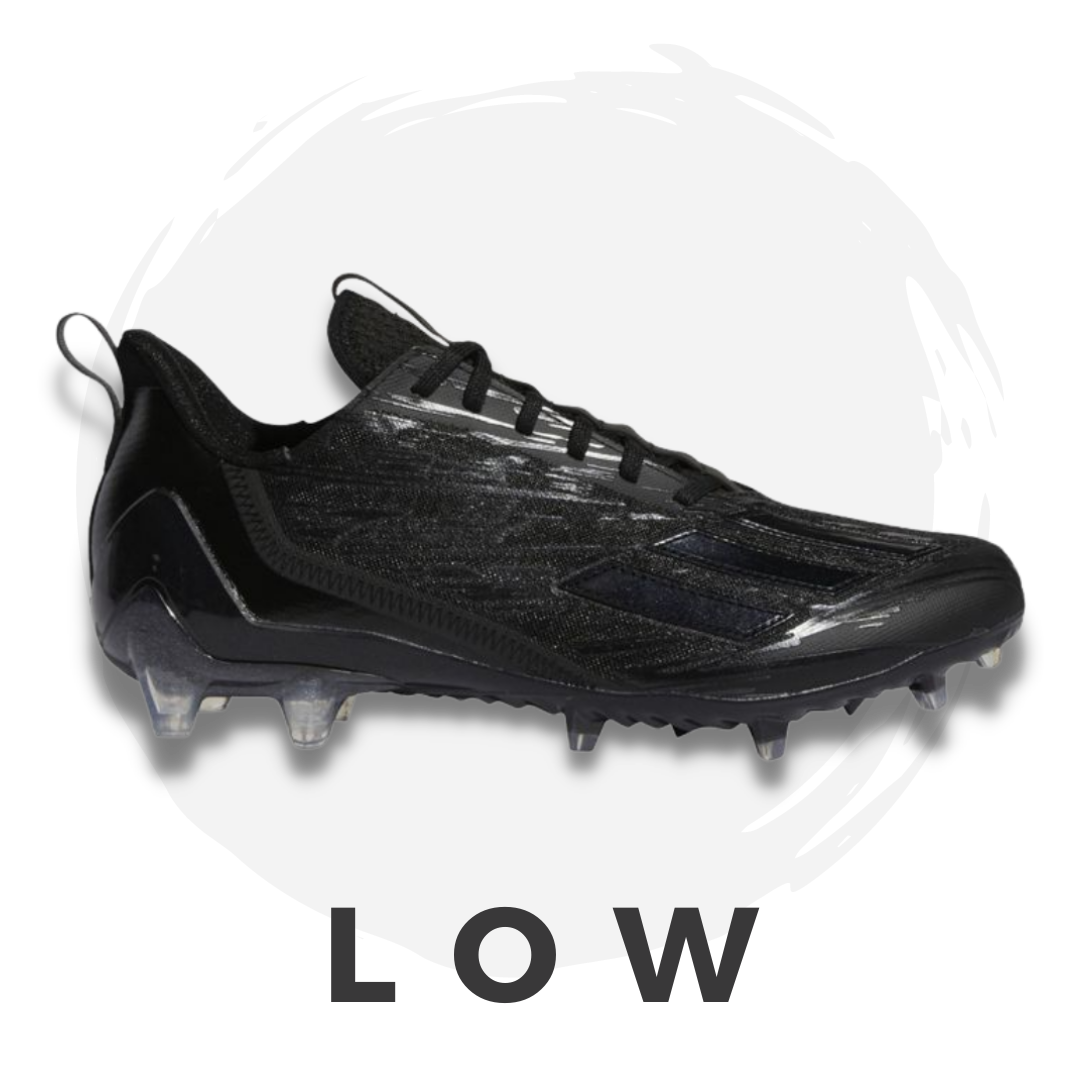
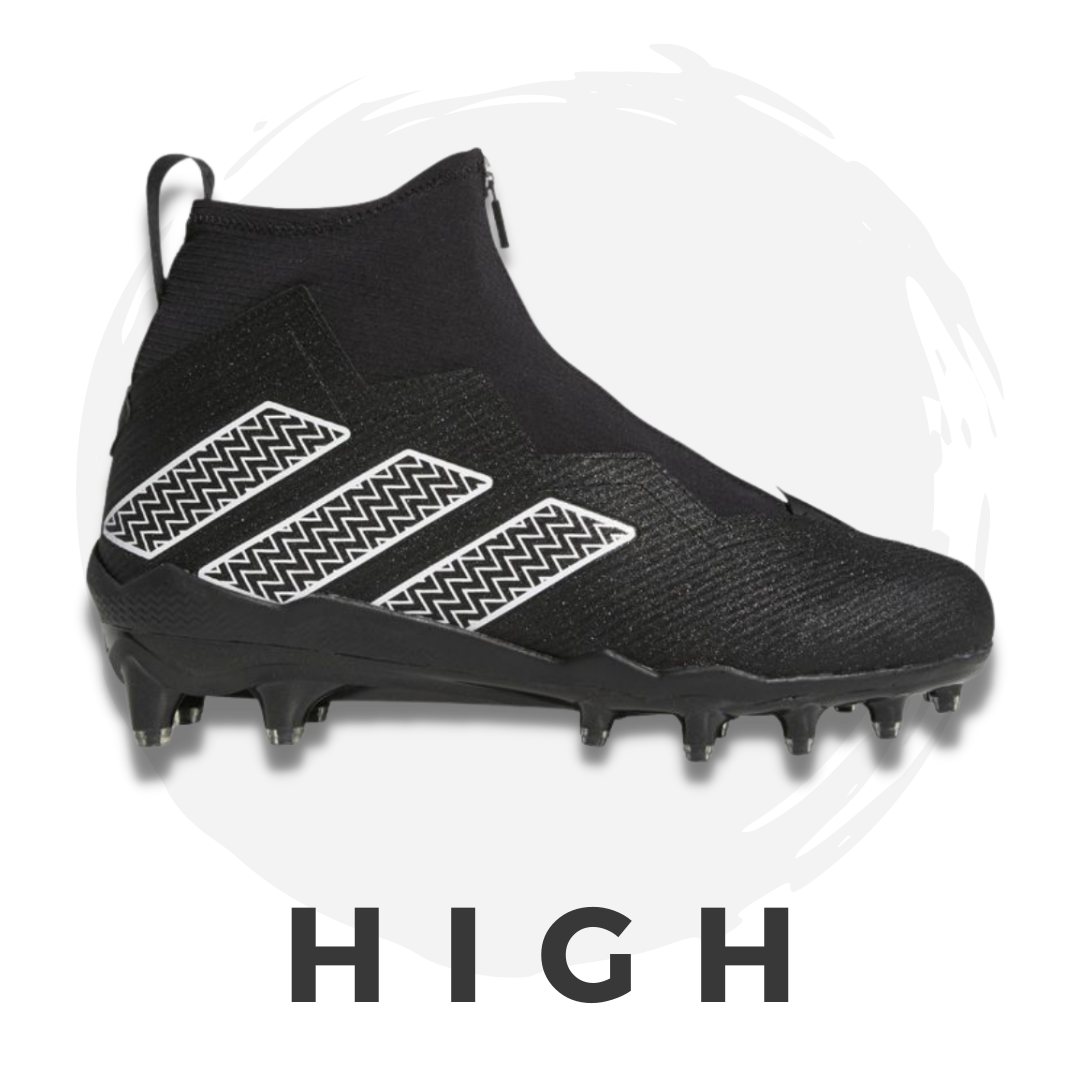
Football cleats have three designs: low, mid, and high-cut. The low-cut design resembles a standard soccer cleat, while the mid and high-cut designs resemble basketball shoes.
Each football cleat design has its advantages. The low-cut design, like the Adidas Adizero Cleats, improves players' speed, while the mid-cut design offers speed and ankle support. High-cut football cleats provide ankle protection.
The cleat design that football players choose depends on the position they play. Players that prefer mid-cut design include:
- Defensive backs
- Some defensive backs
- Quarterbacks
- Running backs
Receivers often use the low-cut design, while linemen prefer the high-cut cleats.
 |
 |
 |
FAQs
The following are the frequently asked questions regarding football cleats vs. soccer cleats' differences.
Can I wear football cleats for soccer?
No, you cannot use football cleats to play soccer. Football cleats have long, sharp studs that may injure other players.
According to the international soccer association rules, players should not use dangerous equipment to play. Football cleat studs are dangerous when used to play soccer. You may get suspended or banned from the league if you are spotted wearing football cleats when playing soccer.
Can I wear soccer cleats for football?
Football players can wear soccer cleats when playing, depending on the player's position or style of play. Often, you may see kickers and punters wearing soccer cleats. The soccer cleats' design allows the kickers to conveniently kick the ball as they would do with football cleats.
Buying Football Cleats vs. Soccer Cleats
Now that you've seen what's the difference between soccer and football cleats, it's upon you to choose the type that suits your needs. So, the next time a person asks you to use soccer cleats for football or vice versa, remember that although it is physically possible, it may be to your disadvantage. RevUp sports should be your go-to place if you are looking for cleats. We'll offer you free advice on the difference between soccer cleats and football cleats, helping you choose the cleats that suit your sport.


